What is it?
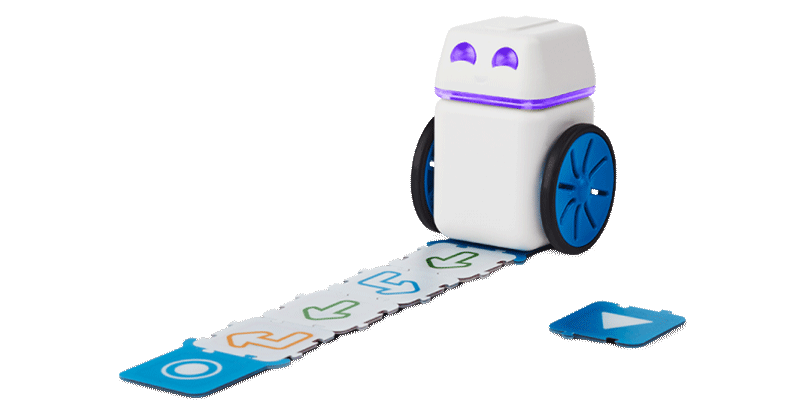
KUBO is a screen-free coding robot that offers young students a fun and engaging way to learn coding skills using a unique puzzle-like concept called TagTile.
TagTile
KUBO aims to teach young students coding with their unique TagTile solution. TagTile is a puzzle-like concept that makes coding as simple for students as putting together puzzle pieces, making learning functions, subroutines, and loops fun and easy for students!
KUBO Map Maker
KUBO Map Maker is a tool that offers teachers the ability to design coding challenges by creating printable maps to use in the classroom. KUBO Map Maker also allows teachers to share their map creations with other educators who are a part of the KUBO community.
Curriculum
KUBOs lesson plans are standard-based and guarantee to make coding easy and fun for both student and teacher. KUBO’s curriculum resources are cross-curricular and fully aligned to computer science curriculum standards. You are guaranteed hours of creative coding activities with a dynamic approach to STEAM learning laying the foundation for computational literacy for children aged 4 to 10+. The curriculum includes comprehensive lesson plans and teacher guides to deliver cross-curricular challenges in a hands-on and playful way.
KUBO Play
KUBO Play offers an optional digital coding solution that incorporates blended learning for students to get the most out of coding both in the classroom and at home. KUBO Play has over 100 tasks for students to work through while also covering all K-5 ISTE coding curriculum requirements. This personalized coding solution allows modified learning for each student to master their coding skills at their own pace, anytime, anywhere, without a robot!
KUBO
- Have students work with a partner. Each student will create a secret map route for the KUBO.
- Sitting back-to-back, one student will describe their map route verbally, the other student will create the route using TagTiles. Students will review the two versions of the route to see if they are the same.
- Students will then switch so that each gets a turn to describe their secret route and create a route based on the communication from their partner.
- Extensions can include secret routes that are communicated through body language only, or a competition in which one student describes the route and multiple other students attempt to complete it the quickest.
