Why Is PBL Important in Secondary Classrooms?
Adam Fragale
Curriculum & PD Specialist
Blog
Students in secondary classrooms (grades 9-12) are now at an educational level where they should be preparing for their futures, such as college, trade school, or the workforce. This means they need to fully develop their 21st century skills. To be able to properly achieve this, students in secondary classrooms need a highly engaging classroom environment. A traditional classroom with a teacher-centered approach is not a viable solution to engaging students with learning. Passively taking notes or listening to lectures can be a disservice to students who will need to use 21st century skills like creativity and critical thinking in the near future. Secondary students deserve a chance to practice these skills and will thrive with a more hands-on approach to learning.
Why choose PBL for secondary classrooms?
Project-based learning is a methodology that involves the in-depth investigation of a topic based on a real-life question or scenario. Activities such as note taking and listening to lectures can occur within the larger framework of PBL, but they are always in service to an essential question that students are actively trying to answer. During PBL, students do the heavy lifting while teachers become the “guide on the side.” Because students are directing the learning, they take more ownership and responsibility for the learning process, and this, in turn, leads to greater learning outcomes and retention of the skills and knowledge acquired. This control allows them to produce a final project of their choice that demonstrates what they have learned.
PBL is also valuable because it incorporates the important social aspects of learning. As students inch closer to heading out into the real world, they will need to have the ability to work and collaborate with others on different projects. Project-based learning involves interacting with others to solve a real world question or challenge. Working with a team builds organizational skills and improves communication and collaboration with others.
PBL challenges
The biggest challenge to implementing PBL into your classroom is you, the teacher. Teachers work incredibly hard preparing lessons, incorporating hands-on activities, and bringing in technological elements to increase student engagement. We appreciate all that you do as teachers but unfortunately, sometimes our efforts contribute to a more passive learning environment. As the teacher, you are the ones who lead the discussions, present the videos, and create and grade the assessments. Despite best efforts to make content engaging, these activities are all teacher-led. PBL takes a different approach and asks teachers to do some upfront planning, and then take a back seat during the actual learning time.
Implementing PBL in secondary classrooms
Proper, professional training is always the best way to learn how to implement PBL into your secondary classrooms, but if your school doesn’t have the means to do so, you, as the teacher, can work to incorporate it on your own. It will not just happen overnight, but here are a few steps you can take to start:
- Start with an essential or driving question about a particular topic.
- Provide some background information to create a foundation for your students’ learning.
- Step aside and give up control to your students so that they can solve real-world questions or challenges.
- Guide along the way providing any necessary resources for success.
- Students create a product of their choice to demonstrate their learning.
Implementing PBL in your secondary classroom will improve your students’ 21st century skills. Collaboration, communication, motivation, and engagement, are all vital for future success. When creating this type of learning environment, you open up the floodgates to high student engagement. Giving students choices allows for deeper connections with what they are learning all while preparing them for life beyond the classroom.
While this all may seem like a daunting task, it is relatively simple to do. It is reccomended to always start small and then go from there. Want a more in-depth tutorial or some implementation ideas? Check out the PBL category on OTIS for educators!
For more tips, tricks, and tools for teaching in and out of the classroom, check out more content on the Teq Talk blog or our YouTube channels OTIS for educators and Tequipment.
We also offer virtual professional development, training, and support with OTIS for educators. Explore the technology and strategies that spark student success — no matter where teaching or learning are happening!
Follow us on social:
 edteq
edteq  OTIS4educators | Teq Products | iBlocks
  OTIS4educators | MyTeq
  Teq
Teq
0 thoughts on “Why Is PBL Important in Secondary Classrooms?”
Related Articles & Other Recommended Reading
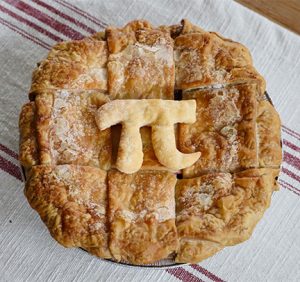
Top 10 Ways to Celebrate Pi Day
Did you know that the first official Pi Day celebration occurred in 1988 at the Exploratorium in San Francisco? In America, we celebrate on March 14th because 3.14 are the first digits of the mathematical constant known as pi. However, in areas such as the United Kingdom, people celebrate on July 22nd. Why? This is […]
7 New PD Courses to Transform Your Classroom for February 2026
Get ready for Digital Learning Day on February 26th! Celebrate with 7 brand-new OTIS courses that make edtech integration easy. From AI-driven lesson planning to interactive classroom tools, master the tech your students love, without the steep learning curve. Here are 7 new PD courses to transform your classroom for February 2026! Check Out What’s […]
Check out our PD Micro-Credential: The Science of Reading
Earlier this year, OTIS for educators launched a PD micro-credential focused on “The Science of Reading.” This 10-part online course takes just under eight hours to complete. “The Science of Reading” micro-credential PD provides participants with a solid foundation of the tenets of reading instruction. We will delve into each component, critical for understanding the […]