Teaching AI to Young Learners, Is It Worth It?
Kasey Campbell
Copywriter
News

We are fortunate to live in a world with enough technological advancements to make our daily lives easier. One of these leading forms of technology comes in the form of AI, or artificial intelligence. It has been taking over the mainstream media. With the ability to mimic human intelligence and perform cognitive functions, it’s a no-brainer that this recent phenomenon has been making headlines. With notable programs such as ChatGPT and Google Bard, AI has quickly incorporated itself into the world of education. Of course, it has its drawbacks. This includes students using it for an ‘easy way out’ of assignments, or blatantly cheating. However, it may just be beneficial to incorporate AI into our curriculum. This can even start with students as young as the early childhood age group. So, the question is, should we be teaching AI to young learners?
Early childhood and the age of technology
Recently, the incorporation of educational technology, or edtech, in classrooms has affected how students learn. As today’s students have become immersed in the digital age, further advancing their knowledge of technology can help them get a head start. There are many edtech solutions available for student use, such as robotics kits, coding kits, 3D printers, and more. This is a great way to ease students into STEM concepts before they take on AI. They can also help students become accustomed to robotics and coding concepts. For example, products such as the KIBO Robot from KinderLab Robotics can help students K-12 learn concepts like coding, programming, and how to handle advanced tech. These products are easy to use for young learners and starting early. They will also help students really grasp those more advanced STEM concepts as they progress.
Are students too young to learn about AI?
In the case of AI, which may seem like an incredibly complicated subject, it may be beneficial for educators to teach their little learners about AI and the fundamentals of computer science. Not only can this help them dip their toes into the world of technology, but it can also help them build digital literacy and learn to make smart choices online. Additionally, state standards have been emphasizing the introduction of STEM curriculum for younger K-12 students. The younger they start, the better.
How can we start teaching AI to young learners? First, it is important to emphasize to children that AI is not a ‘magic’ solution, but instead, a computer program or a machine. This will allow them to understand that AI is not the end-all be-all to their path in education. Instead, it is a helpful tool that they can use to think critically on their own. You can start by having students ask simple questions on AI platforms such as ChatGPT in order for them to get a feel for it. You can connect AI back to other skills like coding to show students how it fits into the larger concepts of computer science and digital citizenship.
AI and KinderLab Robotics
There are tons of advantages to incorporating AI in this way. For example, young students will be able to develop basic computational thinking skills using AI. This article by Jason Innes, Director of Curriculum, Training, and Product Management for KinderLab Robotics, goes into more detail about the process of easing AI into your K-12 curriculum.
We may never know what brand-new type of technology will make waves next. All we can do for now is embrace the ever-changing digital world. It is important for educators to be able to balance building digital fluency while maintaining the integrity of their students.
For more information on AI, check our OTIS course, Enhancing Your Favorite Classroom Tools with AI, and Artificial Intelligence in Education: What Do We Need to Know to get started with your AI journey.
For more tips, tricks, and tools for teaching in and out of the classroom, check out more content on the Teq Talk blog or our YouTube channels OTIS for educators and Tequipment.
We also offer virtual professional development, training, and support with OTIS for educators. Explore the technology and strategies that spark student success — no matter where teaching or learning are happening!
Follow us on social:
 edteq
edteq  OTIS4educators | Teq Products | iBlocks
  OTIS4educators | MyTeq
  Teq
Teq
0 thoughts on “Teaching AI to Young Learners, Is It Worth It?”
Related Articles & Other Recommended Reading
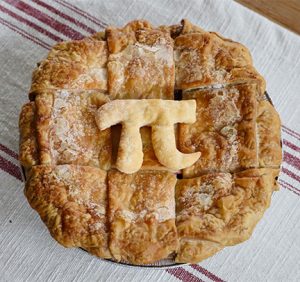
Top 10 Ways to Celebrate Pi Day
Did you know that the first official Pi Day celebration occurred in 1988 at the Exploratorium in San Francisco? In America, we celebrate on March 14th because 3.14 are the first digits of the mathematical constant known as pi. However, in areas such as the United Kingdom, people celebrate on July 22nd. Why? This is […]
7 New PD Courses to Transform Your Classroom for February 2026
Get ready for Digital Learning Day on February 26th! Celebrate with 7 brand-new OTIS courses that make edtech integration easy. From AI-driven lesson planning to interactive classroom tools, master the tech your students love, without the steep learning curve. Here are 7 new PD courses to transform your classroom for February 2026! Check Out What’s […]
Check out our PD Micro-Credential: The Science of Reading
Earlier this year, OTIS for educators launched a PD micro-credential focused on “The Science of Reading.” This 10-part online course takes just under eight hours to complete. “The Science of Reading” micro-credential PD provides participants with a solid foundation of the tenets of reading instruction. We will delve into each component, critical for understanding the […]