STEM Learning Ecosystems: What makes them successful? (UBTECH Education)
Hope Badanes
Proofreader
News

*This blog was originally published by UBTECH Education on February 21, 2025, and has been modified for publishing on Teq.com. For more information on UBTECH Education and products, check out our UBTECH page on Teq.com, request a demo, or get in contact with a sales representative.
STEM learning ecosystems provide dynamic environments that support students as they grow their skills within a subject. A proper ecosystem can include a combination of activities during and after school, aligned curricula designed to scale, and a community of teachers or mentors who can facilitate student’s learning and support them throughout the process. According to the National Research Council, a learning ecosystem is “the dynamic interaction among individual learners, diverse settings where learning occurs, and the community and culture in which they are embedded.”
When implemented successfully, a STEM Learning Ecosystem has the power to encourage engagement, nurture essential soft skills, and facilitate an inclusive learning environment. Let’s explore the essential elements behind a high-impact STEM Learning Ecosystem.
Project-Based Learning
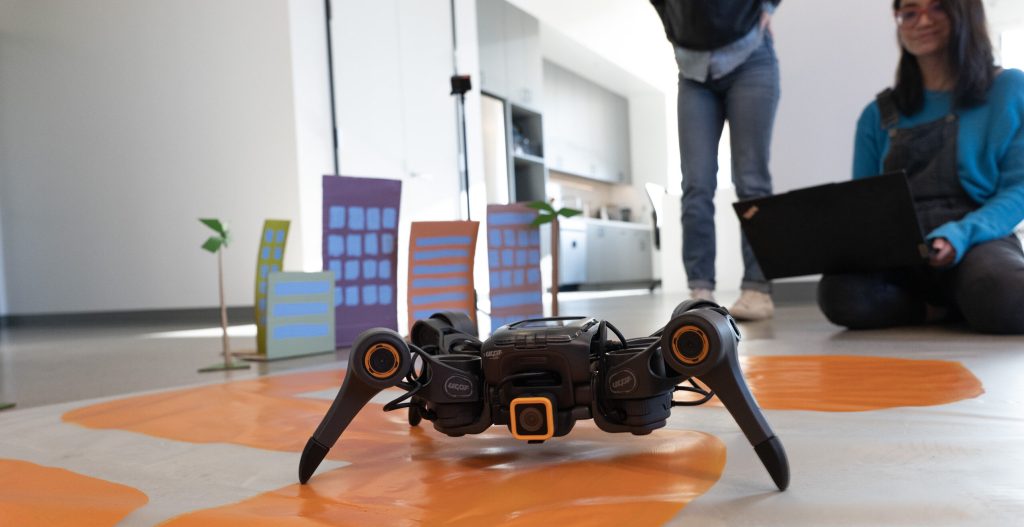
STEM learning and CTE go hand in hand, meeting at the intersection of project-based learning.
Implementing project-based learning opportunities within a STEM learning ecosystem enhances engagement and further skill development. This can be achieved by incorporating prompt-based curricula where students utilize their understanding of STEM concepts to solve challenges. This transforms abstract concepts into hands-on experiences, allowing students to actively engage with their learning and see its real-world applications, including potential career pathways.
The research brief, “Rigorous Project Based Learning,” from Lucas Education Research captures the benefits of this practice well. Their three-year study examined how a science course designed with a project-based learning approach impacted student engagement and academic achievement. Researchers concluded the approach positively affected both aspects, stating that “LTP (learning through performance) students outperformed peers on standardized tests in mathematics and English language arts.” They continue, stating the findings “present strong evidence that all students experience multiple benefits from learning science through hands-on, rigorous project-based learning.”
Scalable Learning
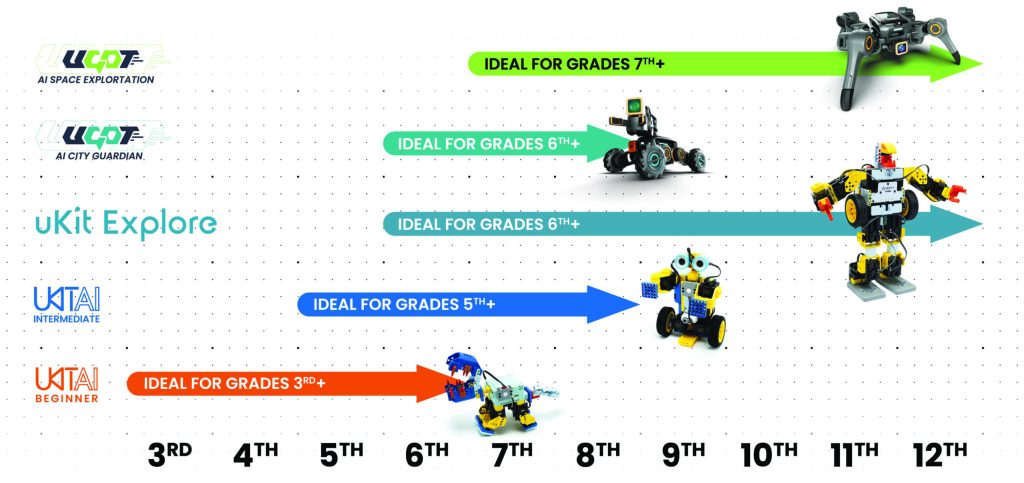
A well-structured STEM learning ecosystem should provide a scaffolded approach where learning builds over time. This is important because it ensures that students can progress at their own pace. Key to this is utilizing adaptive learning solutions that are designed to scale as students grow in their skills. Additionally, tools with this component can support the wide spectrum of learning styles of one class. This can save costs in the long run as institutions can invest in one system as opposed to multiple.
For example, take robotics kits that are capable of both block and text-based coding. Younger students can learn the basic logic of coding using block-code. Meanwhile, advanced students can get started with Python—all while using the same system. In turn, this factor promotes an inclusive learning environment for learners of various skill levels.
Collaborative Learning
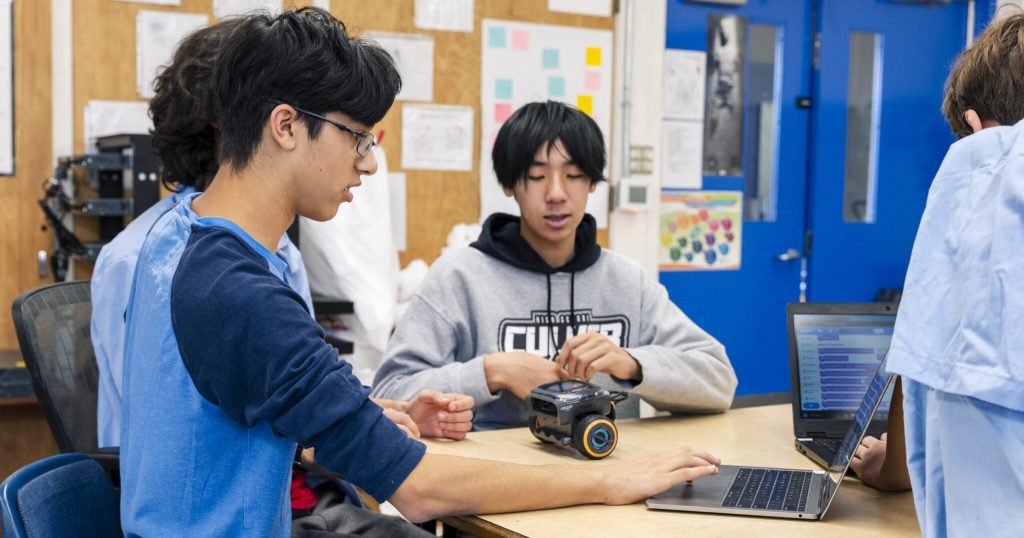
Scalable, project-based learning ecosystems naturally foster collaboration in the classroom. When working in these types of environments, students can learn from each other’s strengths and gain new perspectives on how to solve an issue. Peer collaboration helps reinforce understanding through discussion, debate, and problem-solving.
The American Society for Engineering Education emphasized in their 2024 report, “Teamwork in STEM education holds paramount significance as it mirrors the collaborative nature of modern professional workplaces.”
Collaborative projects encourage students to delegate tasks, listen actively, and articulate their ideas effectively. Furthermore, a collaborative learning environment is a crucial component of a STEM ecosystem. This is because as it stimulates engagement as it fosters skills that are essential for real-world careers.
Building a Future-Ready STEM Ecosystem
A thriving STEM learning ecosystem is more than just a collection of tools, lessons, and activities. It should provide students with engaging and inclusive learning experiences that encourage knowledge sharing and teamwork in the classroom. When developed effectively, these environments are dynamic spaces where students gain technical expertise. In addition, they will also gain essential skills for their future careers.
For more tips, tricks, and tools for teaching in and out of the classroom, check out more content on the Teq Talk blog or our YouTube channels OTIS for educators and Tequipment.
We also offer virtual professional development, training, and support with OTIS for educators. Explore the technology and strategies that spark student success — no matter where teaching or learning are happening!
Follow us on social:
 edteq
edteq  OTIS4educators | Teq Products | iBlocks
  MyTeq
MyTeq  Teq
Teq
Related Articles & Other Recommended Reading

Top 10 Ways to Celebrate Pi Day
Did you know that the first official Pi Day celebration occurred in 1988 at the Exploratorium in San Francisco? In America, we celebrate on March 14th because 3.14 are the first digits of the mathematical constant known as pi. However, in areas such as the United Kingdom, people celebrate on July 22nd. Why? This is […]
7 New PD Courses to Transform Your Classroom for February 2026
Get ready for Digital Learning Day on February 26th! Celebrate with 7 brand-new OTIS courses that make edtech integration easy. From AI-driven lesson planning to interactive classroom tools, master the tech your students love, without the steep learning curve. Here are 7 new PD courses to transform your classroom for February 2026! Check Out What’s […]
Check out our PD Micro-Credential: The Science of Reading
Earlier this year, OTIS for educators launched a PD micro-credential focused on “The Science of Reading.” This 10-part online course takes just under eight hours to complete. “The Science of Reading” micro-credential PD provides participants with a solid foundation of the tenets of reading instruction. We will delve into each component, critical for understanding the […]