Explore New Places with Google Earth, Voyager, and Carmen Sandiego
Michelle Hollander
Director of Educational Content
News

Exploring Google Earth as a remote learning resource
Whether you are stuck at home or simply looking for a new escape, Google Earth has the tools for your next adventure… even if it happens to start from the couch. You can also provide your students with guided explorations and fun quizzes to test their knowledge.
Ready for a “voyage”?
To get started, simply head to earth.google.com. “Feeling Lucky?” Simply click the dice icon on the left side of your screen to randomly visit locations you may never have heard of or seen, such as Mount Palandöken, Saale, or the Kong Family Mansion. Zoom in or drag and drop the little yellow person icon (at the bottom right of the screen) to walk the streets of your chosen destination.
For more guided expeditions, you’ll want to point students to “Voyager.” This section of Google Earth is indicated by a small icon of a ship’s wheel. Content has been curated into the following categories:
There are modules for all disciplines, including math. For example, “Math and Architecture: Circular Structures” not only allows students to visually explore new areas, but also to read, watch, and listen to bite-sized lessons on the topic.
While most of the listed categories may seem intuitive, “Layers” refer to topics surrounding natural features such as global glacier coverage, watersheds, and even seafloor depth. The “Street View” option, on the other hand, immerses you in the area as if you were there in person. Visit the Southern Patagonian Ice Field in Chile or walk the Charles Bridge in the Czech Republic.
Adventures with Carmen Sandiego
Remember Carmen Sandiego? Now students can even chase her around the world in a few different interactive storylines such as, “The Crown Jewels Caper,” “The Tutankhamun’s Mask Caper,” or “The Keys to the Kremlin Caper.” Once the game is selected, click “Begin the Chase” to get started. Graphics are integrated with Google Earth’s platform to allow students to interview witnesses in each city to collect clues. Using the information gathered via the magnifying glass button, students progress by “flying” to the next city using the airplane icon. The correct path is determined by making sense of the provided clues. For instance, if a tourist mentions that a suspect was asking about Mount Fuji… you’ll know that the next city should be Tokyo.
From “Ocean Safaris” to “Fairy Tales from Around the World” to “Lewis and Clark’s Expedition,” there is no shortage of topics to enrich your remote lessons!

More resources and support
If you need help navigating Google Earth, visit their support articles here. You can also check out the Teq Talk blog for more great ideas, tips, and tricks for using technology in the classroom — even remotely.
0 thoughts on “Explore New Places with Google Earth, Voyager, and Carmen Sandiego”
Related Articles & Other Recommended Reading
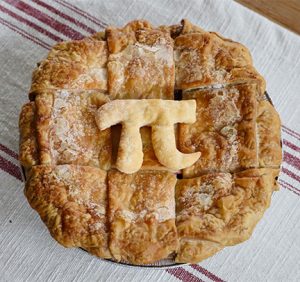
Top 10 Ways to Celebrate Pi Day
Did you know that the first official Pi Day celebration occurred in 1988 at the Exploratorium in San Francisco? In America, we celebrate on March 14th because 3.14 are the first digits of the mathematical constant known as pi. However, in areas such as the United Kingdom, people celebrate on July 22nd. Why? This is […]
7 New PD Courses to Transform Your Classroom for February 2026
Get ready for Digital Learning Day on February 26th! Celebrate with 7 brand-new OTIS courses that make edtech integration easy. From AI-driven lesson planning to interactive classroom tools, master the tech your students love, without the steep learning curve. Here are 7 new PD courses to transform your classroom for February 2026! Check Out What’s […]
Check out our PD Micro-Credential: The Science of Reading
Earlier this year, OTIS for educators launched a PD micro-credential focused on “The Science of Reading.” This 10-part online course takes just under eight hours to complete. “The Science of Reading” micro-credential PD provides participants with a solid foundation of the tenets of reading instruction. We will delve into each component, critical for understanding the […]