Labdisc 101: What it is and What it Can Do for You
Emily Martin
EmilyMartin
News

Lately we’ve been experiencing increased interest in Labdisc, the award-winning data loggers, and how they help teachers and students execute science experiments. Over the next 5 weeks, we will highlight different key features of Labdisc and how it can be used in the classroom.
For this week’s post, we will review what Labdisc is, how it works, and what it can do for you.
What is Labdisc?
Labdisc is an all-in-one, data logging device that places an advanced science lab into the hands of young scientists. The only K-12 compact science device with 10-14 wireless sensors built-in depending on the version you have. Available for general science, physics, biochemistry, and environmental science.
How does it work?
The Labdisc’s internal microprocessor automatically calibrates the built-in sensors, freeing educators to focus on science concepts rather than equipment.
Internal sensors include:
- Labdisc GenSci: Air Pressure, Current, GPS, Light, Microphone, Motion, pH, Relative Humidity, Temperature, Universal Input, Voltage.
- Labdisc Physio: Accelerometer, Air Pressure, Ambient Temperature, Current, Ext. Temperature, Light, Low Voltage, Microphone, Motion, Universal Input, Voltage.
- Labdisc BioChem: IR Pressure, Ambient Temperature, Barometric Pressure, Colorimeter, Conductivity, Dissolved Oxygen (electrode sold separately), GPS, Heart Rate, Light, pH, Relative Humidity, Thermocouple, Turbidity, Universal Input.
- Labdisc Enviro: Barometer, Sound Level, Colorimeter, Dissolved Oxygen (electrode sold separately), GPS, IR Temperature, pH, Relative Humidity, Temperature, Turbidity, Universal Input.
The Labdisc enables portable data collection through GlobiLab, Labdisc’s included software. Students can analyze their findings with a variety of data displays and graph manipulations on a laptop, Chromebook, or iPad.
What can Labdisc do for you?
The Labdisc revolutionizes learning in terms of convenience, cost, and portability. It provides a cable-free, clean and safe working environment, all while allowing students to explore outside of the classroom.
Be sure to look out for next week’s post on how easy it is to get started with the Labdisc.
Be sure to download our Labdisc eBook: https://34.201.222.12/getting-started-labdisc-ebook/
To learn more about Labdisc, visit: https://34.201.222.12/product-offerings/labdisc/.
View our Professional Development Catalog here: https://34.201.222.12/wp-content/uploads/2016/07/Teq_PD_Catalog_2016_web.pdf
0 thoughts on “Labdisc 101: What it is and What it Can Do for You”
Related Articles & Other Recommended Reading
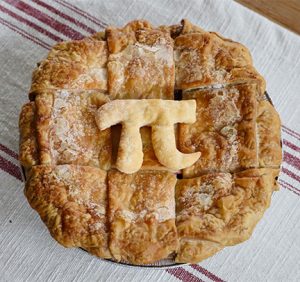
Top 10 Ways to Celebrate Pi Day
Did you know that the first official Pi Day celebration occurred in 1988 at the Exploratorium in San Francisco? In America, we celebrate on March 14th because 3.14 are the first digits of the mathematical constant known as pi. However, in areas such as the United Kingdom, people celebrate on July 22nd. Why? This is […]

7 New PD Courses to Transform Your Classroom for February 2026
Get ready for Digital Learning Day on February 26th! Celebrate with 7 brand-new OTIS courses that make edtech integration easy. From AI-driven lesson planning to interactive classroom tools, master the tech your students love, without the steep learning curve. Here are 7 new PD courses to transform your classroom for February 2026! Check Out What’s […]

Check out our PD Micro-Credential: The Science of Reading
Earlier this year, OTIS for educators launched a PD micro-credential focused on “The Science of Reading.” This 10-part online course takes just under eight hours to complete. “The Science of Reading” micro-credential PD provides participants with a solid foundation of the tenets of reading instruction. We will delve into each component, critical for understanding the […]