4 Basic Google Sheets Features to Get You Started
Diomedes Gonzalez
Senior Account Executive
Blog
Google Sheets is one of many apps offered by Google Workspace. It is a web-based spreadsheet that can be used for multiple purposes. Sheets is great for organizing and visualizing data like grades, or as a hub for resources and rubrics. In this post we’ll share basic tips that will help you navigate this great resource so you can feel comfortable using it in your class.
Freeze Rows and Columns
Did you know that you can freeze rows and columns? This feature is useful when you have a lot of data or information on the spreadsheet and you want the headers to stay in place while you scroll through the sheet. For example, you want to be able to see the date or name of a column across the top while scrolling through grades in lower cells (a cell is the space that contains the data value). To enable this feature, highlight the row or column that you would like to freeze. Next, from the menu options select “View” then select “Freeze.” Now you’ll never lose sight of what the data in each cell represents!
Conditional formatting or alternating colors
This feature will allow you to visually analyze your data by adding colors to the cells. Conditional formatting allows you to change the cell’s color based on the rules you set. For example, if you’re collecting data based on people’s favorite mode of transportation you can set a rule so that all the cells that have the word “car” are red and all the cells that have the word “motorcycle” are green. This feature makes your data pop out, making it easier to understand. Check out this skills video explaining conditional formatting.
Functions
There are many functions available in Google Sheets. Here are ones that are easy to get started with. SUM: Use this function to get the sum of a series of numbers. AVERAGE: Use this function to get the average of a set of data. IF: Use this function to determine what value you receive when an expression is true or false (eg. If it’s true that the dataset is >=50 then set the return value to “YES” if false set it to “NO”). All functions can be found under the Sigma (Σ) icon on the top menu bar.
Explore
The explore feature allows you to ask specific questions about the dataset on the spreadsheet. It generates suggested content for you (based on the data) such as average score, sum of school population, etc. It is an excellent way to visualize data as it also allows you to generate and insert charts into your sheet. To access the Explore feature click the icon in the bottom right corner.
To learn more about Google Sheets and other Google Workspace Apps checkout the “Skills” section on our website. For more in depth information on Google Sheets check out Google Workspace for Education: Google Sheets.
For more tips, tricks, and tools for teaching in and out of the classroom, check out more articles on the Teq Talk blog.
We also offer virtual professional development, training, and remote learning support for educators with OTIS for educators. Explore the technology, tools, and strategies that can spark student success — no matter where teaching or learning are happening.
0 thoughts on “4 Basic Google Sheets Features to Get You Started”
Related Articles & Other Recommended Reading
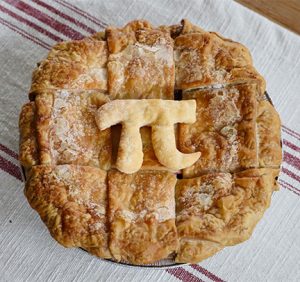
Top 10 Ways to Celebrate Pi Day
Did you know that the first official Pi Day celebration occurred in 1988 at the Exploratorium in San Francisco? In America, we celebrate on March 14th because 3.14 are the first digits of the mathematical constant known as pi. However, in areas such as the United Kingdom, people celebrate on July 22nd. Why? This is […]

7 New PD Courses to Transform Your Classroom for February 2026
Get ready for Digital Learning Day on February 26th! Celebrate with 7 brand-new OTIS courses that make edtech integration easy. From AI-driven lesson planning to interactive classroom tools, master the tech your students love, without the steep learning curve. Here are 7 new PD courses to transform your classroom for February 2026! Check Out What’s […]

Check out our PD Micro-Credential: The Science of Reading
Earlier this year, OTIS for educators launched a PD micro-credential focused on “The Science of Reading.” This 10-part online course takes just under eight hours to complete. “The Science of Reading” micro-credential PD provides participants with a solid foundation of the tenets of reading instruction. We will delve into each component, critical for understanding the […]