Top Ten 3D Printing Terms You Should Know
Diomedes Gonzalez
Senior Account Executive
Blog
3D printing designs are created with layers of material being laid down on top of each other in an additive process. Many schools and educators are investing into this technology to reinforce skills in the engineering and design process. It’s easy to understand the overall process of how 3D works, but it’s even easier when we understand proper 3D printing terminology. Here are ten words you must know to help you become confident when you’re talking about and teaching 3D printing.
3D Printing Terms:
- Overhang: A part of a 3D model that is either partially or fully unsupported underneath. Overhangs of more than 45 degrees need support.
- Bridge: An overhang across two points, drooping in the middle.
- Wall Thickness: The distance between one surface and the other side of that surface. Note that there’s a limitation to the thickness of a wall based on the extruder’s nozzle diameter. It’s recommended to go twice the size of the nozzle.
- Orientation: The location of an object on the plane, including x, y, and z axes. We recommend rotating your model so that it’s in the best position to print.
- Slicing: The process by which the 3D model file is broken up into layers in a software program called a “slicer”. The slicer generates what is known as a g-code which then tells the 3D printer exactly how to move while printing.
- Support: To help with overhangs or bridging, support material can be generated to ensure your design is printed properly. This is a temporary structure that can then be removed or dissolved in water depending on the type of support material that you use.
- Filament: The material used to print your design. PLA (Polyactic Acid) is used to print the design and PVA (PolyVinyl Alcohol) is used to generate support.
- Infill: Determines how dense or hollow a 3D model is. To create a fully solid object, the infill density must be at 100%. The lower the infill density, the lighter and more hollow your object will be.
- Shells: The outer walls that make up the perimeter of the 3D model.
- CAD: An acronym that stands for computer-aided design. CAD is software that helps you generate or create your 3D Design.
If you’re looking to get started with 3D printing, be sure to review these words and help your students understand them as well. The more you use your 3d printer and CAD software, the more you will find yourself needing to use these terms. Do you have any other terms or tips about 3D printing for beginners? Please share in the comments below! Be sure to check out our STEM category on OTIS for educators for great courses on the Ultimaker, MakerBot, Tinkercad, lesson ideas, and more!
For more tips, tricks, and tools for teaching in and out of the classroom, check out more articles on the Teq Talk blog.
We also offer virtual professional development, training, and remote learning support for educators with OTIS for educators. Explore the technology, tools, and strategies that can spark student success — no matter where teaching or learning are happening.
0 thoughts on “Top Ten 3D Printing Terms You Should Know”
Related Articles & Other Recommended Reading
Top 10 Ways to Celebrate Pi Day
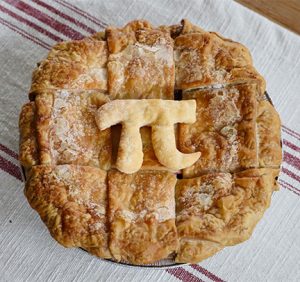
Did you know that the first official Pi Day celebration occurred in 1988 at the Exploratorium in San Francisco? In America, we celebrate on March 14th because 3.14 are the first digits of the mathematical constant known as pi. However, in areas such as the United Kingdom, people celebrate on July 22nd. Why? This is […]

7 New PD Courses to Transform Your Classroom for February 2026
Get ready for Digital Learning Day on February 26th! Celebrate with 7 brand-new OTIS courses that make edtech integration easy. From AI-driven lesson planning to interactive classroom tools, master the tech your students love, without the steep learning curve. Here are 7 new PD courses to transform your classroom for February 2026! Check Out What’s […]

Check out our PD Micro-Credential: The Science of Reading
Earlier this year, OTIS for educators launched a PD micro-credential focused on “The Science of Reading.” This 10-part online course takes just under eight hours to complete. “The Science of Reading” micro-credential PD provides participants with a solid foundation of the tenets of reading instruction. We will delve into each component, critical for understanding the […]