10 Ways to Learn About 3D Printing at ISTE 2018
Marketing Team
News
ISTE starts next week! If you’re interested in learning about how 3D printing can be an effective tool in the classroom, here are ten ways you can learn more at ISTE this year. You can also download our free eBook, Why 3D Print in the Classroom to learn more.
1. Creating Your Own STEAM Makerspace Program: Ideas and Considerations
Sunday, June 24, 10:00 – 11:00 AM, Location: W183c
Makerspaces are becoming cornerstones of schools’ STEAM offerings. From low-tech buildable options to high-tech coded 3D prints, and some things in between, we’ve
got a hands-on session to help you figure out what’s right for your solution. Bring your imagination and flex your creative muscles! Skill Level: Beginner, Grade: PK – 12
2. Maintaining a Meaningful Makerspace
Monday, June 25, 2:00 – 4:00 PM, Location: Posters; Level 3, Skyline Ballroom Pre-function, Table 21
Get hands-on ideas for maintaining a meaningful library makerspace, including the rotation of activities or lessons such as virtual reality, circuitry and 3D printing. Ideas for organization, design and lists of materials for the makerspace will be included. Skill Level: Beginner, Grade: 6 – 8
3. Showcasing How Minecraft Can Empower Global Collaboration
Tuesday, June 26, 1:15 – 3:15 PM, Location: Posters; Level 3, Skyline Ballroom Pre-function, Table 4
A journey about how to implement Minecraft, one of the most powerful tools to foster creativity in students. Working with schools around the world on projects and printing elements on 3D printers will take your classroom to the next level. Skill Level: Beginner Grade: PK-12
4. STEAM in Action
Tuesday, June 26, 1:15–3:15 pm, Location: Posters; Level 3, Skyline Ballroom Pre-function, Table 13
From transforming spaces to transforming thinking, learn how our K–5 STEAM lab has mixed a cardboard arcade with augmented reality, 3D printing with ceramics, G-Suite with worm composting and more. From week-long projects to stand-alone lessons, participants will learn how to make learning more meaningful. Skill Level: Beginner, Grade: PK-5
5. Peeling Back the Layers of 3D Printing
Tuesday, June 26, 1:45 – 2:45 PM, Location: W180
Intrigued by 3D printing? Want to learn how to make it work in your classroom or school? Explore the next gen technology that is turning learners into makers, discover creative ways to integrate it into your curriculum and find out how to fund your own 3D printing adventure! Skill Level: Beginner, Grade: PK-12
6. 3D Printing in ELA: The Narrative Power of Visual Models
Tuesday, June 26, 4:00 – 6:00 PM
Get strategies for using 3D printing for interpretive storytelling. The 3D models covered in this session are based on the setting of a fictional text and support inferencing, character, theme and conflict analysis. The embedded QR codes show how students access discussion questions and make textual connections. Skill Level: Intermediate, Grade: PK-12
7. Designing and Creating Art Pieces for 3D Printing Using Free Software
Tuesday, June 26, 4:00 – 6:00 PM, Location: Posters; Level 3, Skyline Ballroom Pre-function, Table 17
The students will show the process for the preparation in the design and creation of 3D art pieces using the previous cross-curricular knowledge and their creativity resources, all using free 3D apps and software, in a homemade 3D printer. Skill Level: Beginner, Grade: 6-12
8. Paper3: Why 3D Print? The Impact of 3D Printing on Student Learning
Wednesday, June 27, 8:30–9:30 am, Location: W179a, Table 3
As increasingly more schools purchase 3D printers for teaching and learning, it’s important to examine how these new technologies shape student learning. In this session, we will share results from survey data of 51 educators about the impact of 3D printing on students’ 21st century skills & knowledge. Skill Level: Beginner, Grade: PK-12
9. 3D Printing to Improve Performance in Math and Science Courses
Wednesday, June 27, 10:00–11:00 AM, Location: W196c
Learn how students use 3D printing to help math and science teachers across the district increase learning opportunities in their classrooms. In the project, learners
met with teachers, developed 3D printed solutions, then completed a multi-touch book to help other teachers replicate this project in their own classes. Skill Level: Beginner, Grade: 9-12
10. Employ Design Thinking with 3D Printing While Learning to Code
Wednesday, June 27, 11:00 AM – 12:30 PM, Preregistration Required, Registration code: BYODEX409, Location: Hyatt Regency Grant A
3D printers open up a learning path allowing students to design, build, communicate and share their own solutions to real-world problems through the lens of content standards. When combined with design thinking, it makes a powerful learning tool. Finally, see how to apply coding to design to visualize code. Skill Level: Beginner, Grade: PK-12
Download this handy brochure, to take this information with you as you walk the conference floor. If you’d like to meet with Teq at ISTE, you can schedule a meeting here.

0 thoughts on “10 Ways to Learn About 3D Printing at ISTE 2018”
Related Articles & Other Recommended Reading
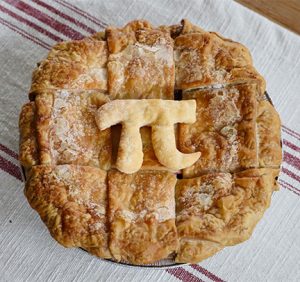
Top 10 Ways to Celebrate Pi Day
Did you know that the first official Pi Day celebration occurred in 1988 at the Exploratorium in San Francisco? In America, we celebrate on March 14th because 3.14 are the first digits of the mathematical constant known as pi. However, in areas such as the United Kingdom, people celebrate on July 22nd. Why? This is […]
7 New PD Courses to Transform Your Classroom for February 2026
Get ready for Digital Learning Day on February 26th! Celebrate with 7 brand-new OTIS courses that make edtech integration easy. From AI-driven lesson planning to interactive classroom tools, master the tech your students love, without the steep learning curve. Here are 7 new PD courses to transform your classroom for February 2026! Check Out What’s […]

Check out our PD Micro-Credential: The Science of Reading
Earlier this year, OTIS for educators launched a PD micro-credential focused on “The Science of Reading.” This 10-part online course takes just under eight hours to complete. “The Science of Reading” micro-credential PD provides participants with a solid foundation of the tenets of reading instruction. We will delve into each component, critical for understanding the […]